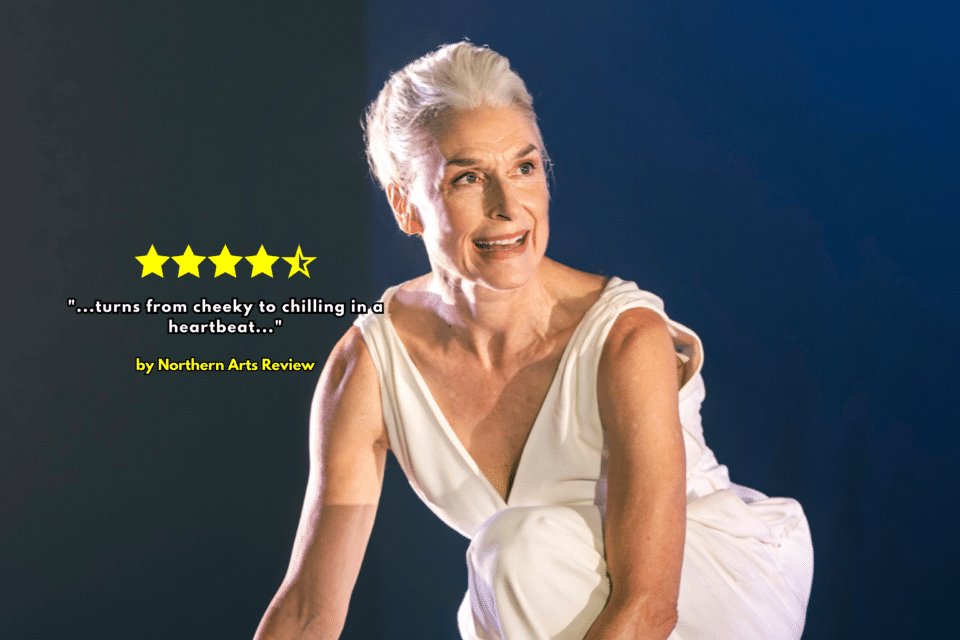
The Penelopiad - Northern Arts Review
at York Theatre Royal
The Penelopiad - Northern Arts Review
When I was a teenager and just a fledgling little drama queen, I became a bit obsessed with Greek tragedy, and specifically Medea. There was something about the purity of the staging – the adherence to the “unities” and the give-and-take between Medea and her chorus – that always spoke to me. Plus, the female rage. Oh, so much female rage and bloody murder. When we think of revenge, we open the Medea playbook. But beyond the poisoned crowns, there was something so powerful about that archetypal image of Medea, centre stage, flanked by her chorus, in control of the audience’s attention at all times. She may have let Jason believe he won, but we know, by the way she commands the audience with her presence, that she will get the last laugh (though you do rather wish she’d left her filicide at home). So years later, when The Penelopiad was first staged, I became immediately intrigued. The maids as a Greek chorus, you say? Classical staging elements, you say? Alas, I never managed to see a performance and filed it under the heading of “Things that would have been cool if I had managed to organise myself”. Thankfully, I must have pleased the gods because, after a nearly 20-year wait (Penelope, I feel ya, girl), the chance finally came around again, and I was excited to find out if it had been worth unpicking my weaving for almost two decades.
Margaret Atwood’s The Penelopiad began as a 2005 novella, a feminist reworking of Homer’s Odyssey, before Atwood adapted it for the stage. First performed in 2007 as a co-production between the Royal Shakespeare Company and Canada’s National Arts Centre, the play has waited almost two decades for a major UK revival. Now, York Theatre Royal’s Creative Director Juliet Forster brings it back to the stage with an extended run. Coming to us from the underworld in non-corporeal form, Penelope finally gets the chance to tell her side of the twenty years she spent waiting for Odysseus to return from the Trojan War. Whilst the traditional tale paints a picture of unwavering fidelity, we learn there is a lot more to her story than patience and endless weaving. Far from a one-woman stonewall against the suitors, Penelope seeks help and refuge from her twelve maids – the same ones later hanged on Odysseus’s orders. With the maids forming a chorus of their own, we get a glimpse behind the screen at the sacrifices the legend has left out.
To see my full review, please visit Northern Arts Review
See you in the shadows my loves,
Sean x