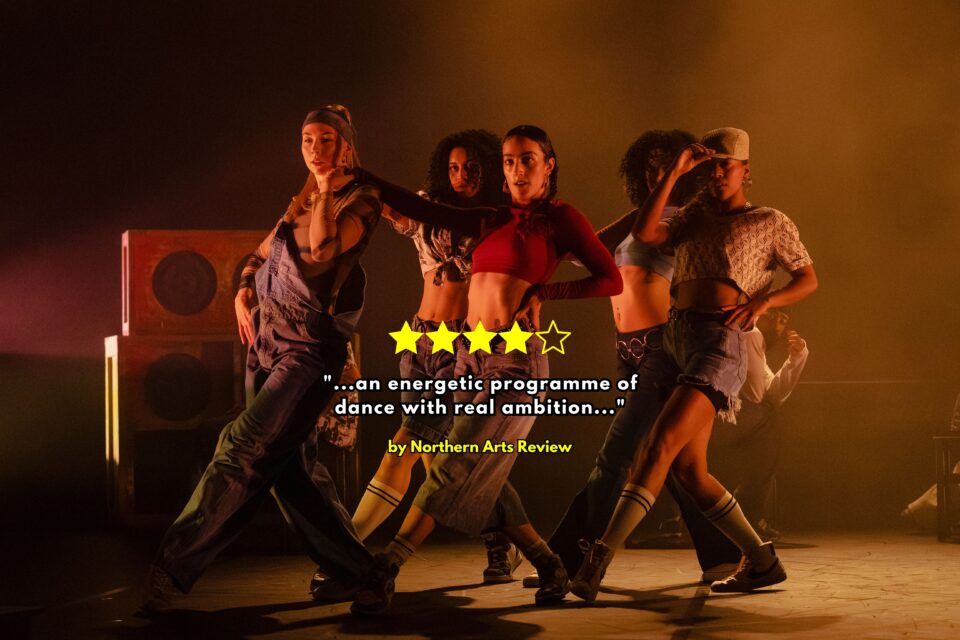
Interplay - Northern Arts Review
Phoenix Dance Theatre at the York Theatre Royal
Interplay - Northern Arts Review
I have a rule about dance theatre: I don’t read the programme before I go in. It’s part of my personal ethos, and one that sits at the heart of what I believe the contract between production and audience ought to be. The choreographer, the director, the company: they make a promise to communicate something to me, and I make a promise to meet them with intention and good will. But what I’m not going to do is rob us of our journey together by peeking at the answer before I sit the exam. What I want (and what I think audiences deserve) is work that communicates its concept thoroughly enough that the meaning shines through. Not necessarily literally, or with the explicitness of a plot summary, but with enough purpose, enough shape, that the thing they are reaching for is legible from the stalls. Phoenix Dance Theatre’s world premiere quad bill Interplay is an evening of dance theatre that strives for mood over narrative, and three of its four pieces honour that bargain with zeal.
Founded in 1981 by three young Black men from the Harehills area of Leeds, Phoenix Dance Theatre has spent over four decades as one of the UK’s leading contemporary dance companies (the longest standing outside of London) and its mission has always been tied to cultural storytelling that gets overlooked elsewhere. Under its ninth artistic director, Marcus Jarrell Willis, Phoenix has been finding its feet in a new chapter. Interplay brings together four pieces by five choreographers that explore duality and connection.
The evening opens with Willis’s Next of Kin, a duet reimagined from its 2013 New York premiere, and it was my favourite of the night by some distance. A man and a woman take the stage—barefoot, in button-up shirts and khaki shorts—and what they give us, almost immediately, is childhood. Not a nod towards it, but the actual restless, bum-waggling, elbow-nudging, giggling physicality of children somewhere between five and eight years old. It was as if someone had sat with children of that age for a long enough time that they understood the language of childhood and had translated it directly into physicality and movement. Near the end, a cloaked authority figure appears briefly in the shadows. The dancers orient towards it without engaging directly, and there was a looming tension there that I really enjoyed. Childhood under the spectre of adulthood.
To see my full review, please visit Northern Arts Review
See you in the shadows my loves,
Sean x