
Why it Works
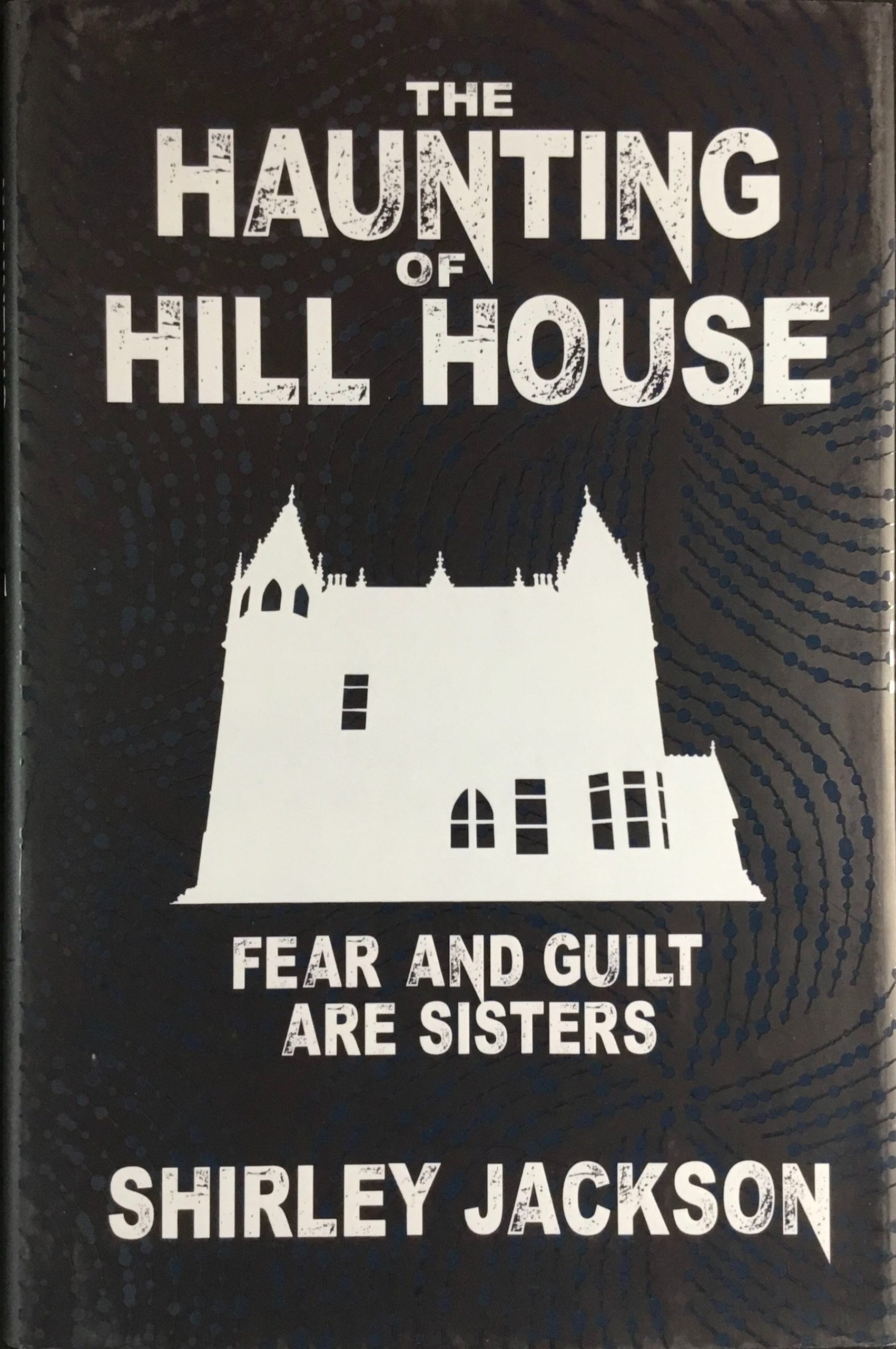
The Haunting of Hill House
By Shirley Jackson
Why it Works - The Haunting of Hill House
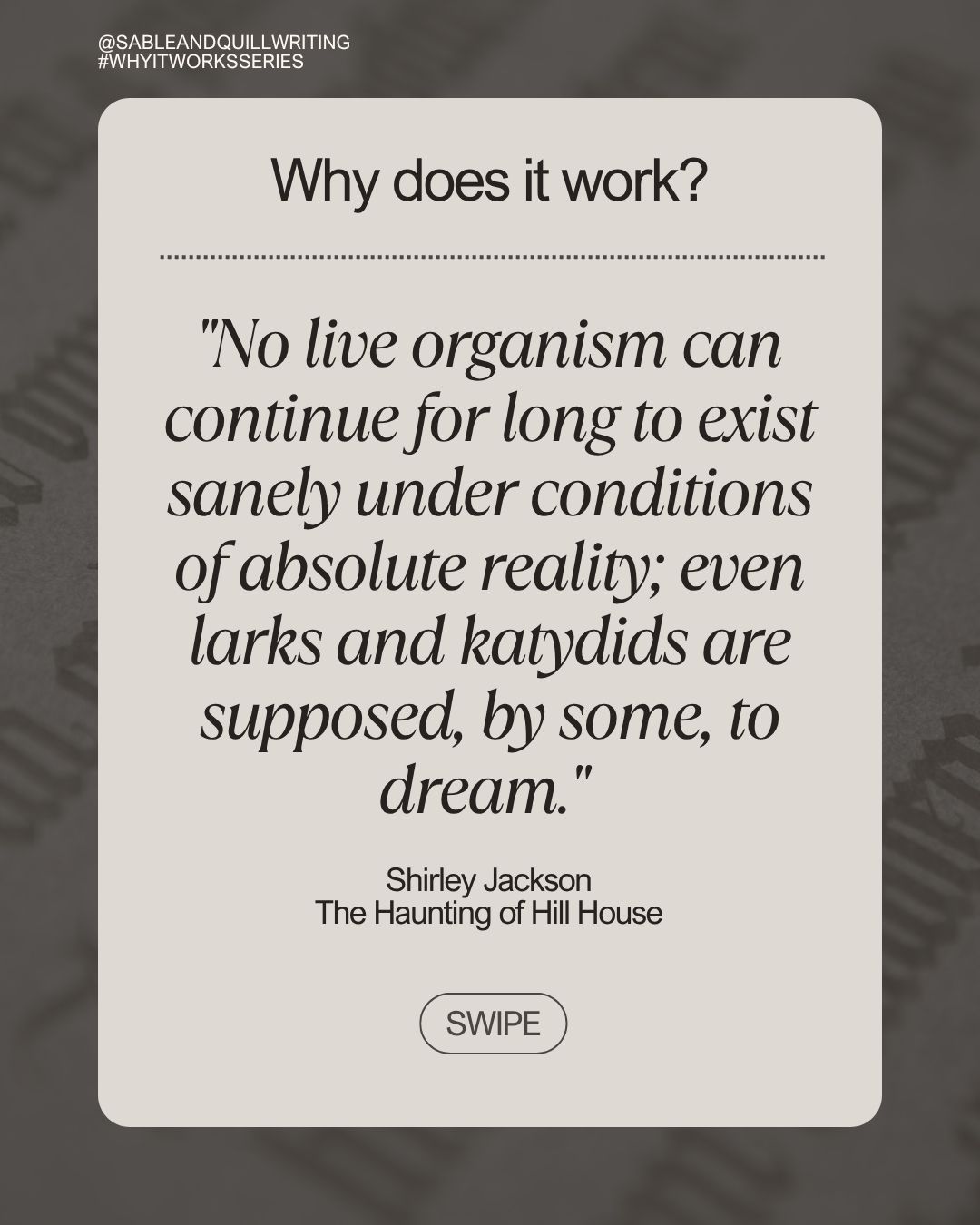
“No live organism can continue for long to exist sanely under conditions of absolute reality; even larks and katydids are supposed, by some, to dream.”
—Shirley Jackson, The Haunting of Hill House
There’s plenty of advice out there on what not to do in your opening line. Don’t start with a character waking up. Don’t start with weather. Don’t open with something too abstract.
Blah blah, blah.
Instead of talking about rules, let’s do something more interesting. Let’s look at why good openings work and how you can nab their techniques and make them your own.
The Haunting of Hill House is the quintessential “mad professor asks people with psychic abilities to wake a up a sleeping entity” story. It is a slow-burner centred on a group of people investigating a haunted house. However, as the story progresses, we find it’s really about the psychological unravelling of our protagonist as her latent psychic powers awaken a dark force. From the very first line, Jackson lays the groundwork for that descent, with her tense juxtaposition.
Clinical words in an eerie context
There’s something deliciously off-putting about horror written in the language of science. Think Frankenstein. Or Sphere. Phrases like “live organism” or “conditions of absolute reality” don’t typically belong in a ghost story. They sound like they’ve come from a lab report, and that’s exactly why they’re effective. When the uncanny is framed in rational, scientific language, it makes the reader feel just the tiniest bit unmoored. As if these what happens next could be real because there are proofs and diagrams waiting in the wings.

Then the reversal
The tone flip in the second half of the sentence is such a subtle move, but it’s what really hooks you. Suddenly, we’re drifting: larks, katydids, dreaming. It’s lyrical and rhythmic, but slightly odd. What even are katydids?
Then, note the semi-colon. The punctuation is doing half the work here. It slows everything down and make it feel suspended. And because it’s such a sharp contrast, you instinctively lean in.
Wait. One minute we are talking about sanity, the next minute larks and dreams.
A sinister & absolute reality
Don’t you just love how she sneaks in that idea of “absolute reality” like we already agree that it’s something oppressive? The phrasing is so confident, so matter-of-fact, that you don’t question it at first. But then you realise—this isn’t something I think is true. What even is absolute reality? What does that look like?
When you open your mind and begin to envision absolute reality, you begin to realise how unsettling the idea is. Even in TV and movies, we don’t want the world we see to be too sharp, too real. We want the patina of softness that makes the world safe. The absolute reality is that we are never safe.
Hidden foreshadowing
I always find it interesting how early Jackson starts planting seeds. “Live organism” doesn’t jump out immediately, but it’s doing something clever. It makes you wonder: what’s alive? Are we talking about people? Or the house? That ambiguity makes us feel very unsteady, indeed. It’s gentle foreshadowing, and it works because it doesn’t try too hard. Just a little motif here and a little motif there. Sprinkled like pepper.
Are you working on your opening line? Try starting not with plot or place, but with an idea. Something that feels true, but maybe a little uncomfortable or weird. Or if you’re feeling spicy, write a sentence that shifts tone halfway through. See what happens when you contrast the clinical with the poetic, or the abstract with the grounded.
What kind of mood can you evoke when even your sentence is built with tension?
If you do, come and find me on Instagram (@sableandquillwriting)
See you in the shadows my loves,