The Constant Wife - Northern Arts Review
RSC Swan Theatre at the York Theatre Royal
The Constant Wife - Northern Arts Review
“She eats well, sleeps well, dresses well and she’s losing weight. No woman can be unhappy in those circumstances.” Mrs Culver’s assessment of her daughter opens The Constant Wife, and it’s the kind of logic that makes perfect sense until you think about it for even a second. The entire play operates on this same principle: everyone is confidently wrong about Constance Middleton and watching her let them be wrong while she calmly secures her own power is both very funny and surprisingly layered.
Laura Wade’s adaptation of Maugham’s 1926 drawing-room comedy was a sell-out hit at the RSC’s Swan Theatre and has recently begun a six-month national tour, arriving this week at York Theatre Royal. The premise is simple: Constance discovers her husband John is having an affair with her best friend, Marie-Louise. But that’s where the simplicity ends. Rather than leaving John, Constance stays, realising that not only does she still care about John, but divorce would result in losing everything about her life that she truly loves: her home, her position, and even her closest true confidant—her butler. The play quickly moves past the tired tropes of infidelity and becomes more interested in how Constance uses patience and cunning to rebalance an unequal marriage on her own terms.
As a comedy of manners, a great deal of the fun comes from how information is revealed. In true farce fashion, everyone makes it about themselves. Watching this absurd pile-up is both funny and poignant as it becomes clear that the only person whose feelings don’t seem to matter is Constance.
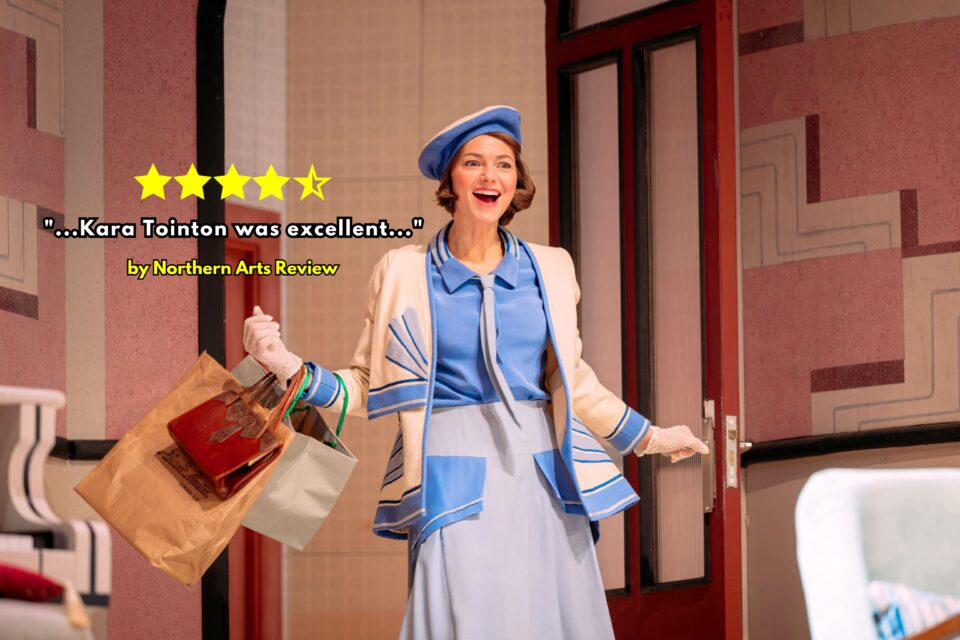
Kara Tointon was excellent as Constance and felt incredibly well suited to the role, playing the part with a kind of amused clarity that sits just on the right side of smugness. Jane Lambert, performing as Mrs Culver this evening as an alternate, gave genuinely hilarious monologues on the “naturally polygamous” nature of men. But it was Gloria Onitiri’s Marie-Louise who stole every scene she dramatically floated into. There’s a moment where she throws herself on the floor in despair, crying about being put in a terrible position that had me in stitches. You can’t help but root a little bit for a character that flings herself down onto the piano keys in abject—and hilarious—despair. Philip Rham’s Bentley was a warm, softly funny presence, and his relationship with Constance allowed us to examine her emotional landscape without becoming sentimental.
To see my full review, please visit Northern Arts Review
See you in the shadows my loves,
Sean x