The Marriage of Figaro - Northern Arts Review
Opera North at the The Leeds Grand
The Marriage of Figaro - Northern Arts Review
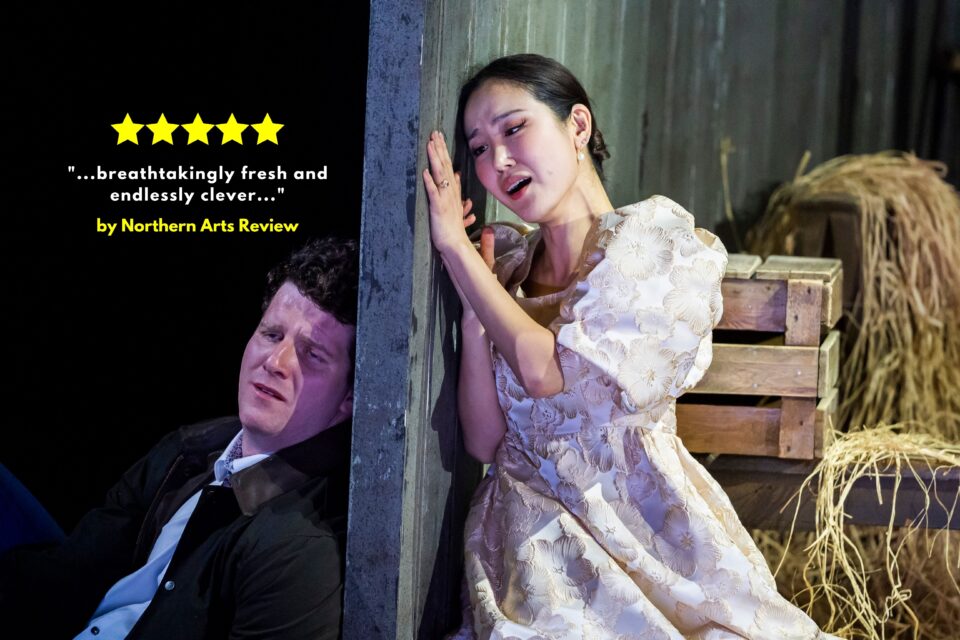
I once saw someone describe The Marriage of Figaro as “Bridgerton with a more confusing plot,” and whilst I’d argue the plot isn’t confusing so much as delightfully chaotic, the comparison is joyously apt. Opera North’s new production, though, feels less Bridgerton and a little more like Downton Abbey—if the Crawleys had to deal with a philandering lord, a lovesick teenage page, and a wedding that kept getting derailed by increasingly ridiculous hijinks. Director Louisa Muller and designer Madeleine Boyd have set Mozart’s comedy in a crumbling English “pile”, complete with tourists snapping photos and a family desperately trying to keep the doors open. It’s a world where legacy is expected but not respected, and it proves the perfect vehicle for modernising the class tensions of the original play.
Mozart’s opera, based on Beaumarchais’s scandalous 1784 play, caused rather a stir in its day. The idea that servants could outwit their aristocratic masters was revolutionary enough to be banned in Vienna by Emperor Joseph II. In fact, librettist Lorenzo da Ponte had to strip out the play’s most provocative bits just to get permission though, fortunately, its subversive heart remained. The opera premiered in May 1786 with Mozart himself conducting, and this is the first time in Opera North’s 47-year history that they’ve performed it in the original Italian.
The story unfolds over a single madcap day. Figaro and Susanna, both servants, are trying desperately to get married, but the Count has his sights set on Susanna. Meanwhile, the Countess longs for the return of her husband’s affection, an older woman has manufactured a contract to marry Figaro, and Cherubino (the Count’s randy teenage page) is desperately in love with every woman within a five-foot radius. It’s a merry-go-round of deception and shenanigans, and by the end everyone’s hiding under stairs, passing notes, jumping out of windows, and wearing disguises.
Though simple, Boyd’s set design is endlessly clever. We begin in a narrow boot room, all higgledy-piggledy with the furniture and workday clutter of a busy English estate. As the story progresses, the space transforms: a bathroom with a bathtub and stairs, a grand hall suggested by a single wall and chandelier, and finally the stables. Each scene was tied together visually with an ingenious diagonal motif inspired by a staircase that appeared in nearly every scene, flipped, moved, and redecorated to create a through-line that made the house feel cohesive, even if we only ever saw it in parts. With each set change, we watched the pieces move into place with the precision of clockwork, and that repeating diagonal line gave everything a sense of spring-tightened energy.
The costumes matched the sets in their authenticity, with each character wearing clothes that fit their station and silhouette. The Countess wore flowing dresses that looked elegant without fussiness, whilst the men appeared in jumpers and shirts like any proper English country gentleman would do. Susanna’s wedding dress, a white brocade with embroidered flowers and a birdcage veil, was particularly swoon-worthy.
Muller gave real thought to breathing fresh life into a 250-year-old story that might otherwise feel like an opera relic, too tied to the humour and culture of its time. One of her smartest choices was adding a pregnancy subplot for the Countess. In a contemporary world where divorce is easy, why would she stay with such an unfaithful husband? The answer can be found woven through nursery preparations and tiny baby clothes: she wants to build a family with him. And Gabriella Reyes brought such compassion to the role that you absolutely believed in that longing. Reyes’ voice was pristine. Every note was so clear it felt like hearing a single piano key struck—an impossible purity that doesn’t seem like it should come from a human. Seeing her sing Dove sono is worth the price of admission alone.
To see my full review, please visit Northern Arts Review
See you in the shadows my loves,
Sean x